Self-reporting Microarray Platforms that use
Molecular Beacon Probes
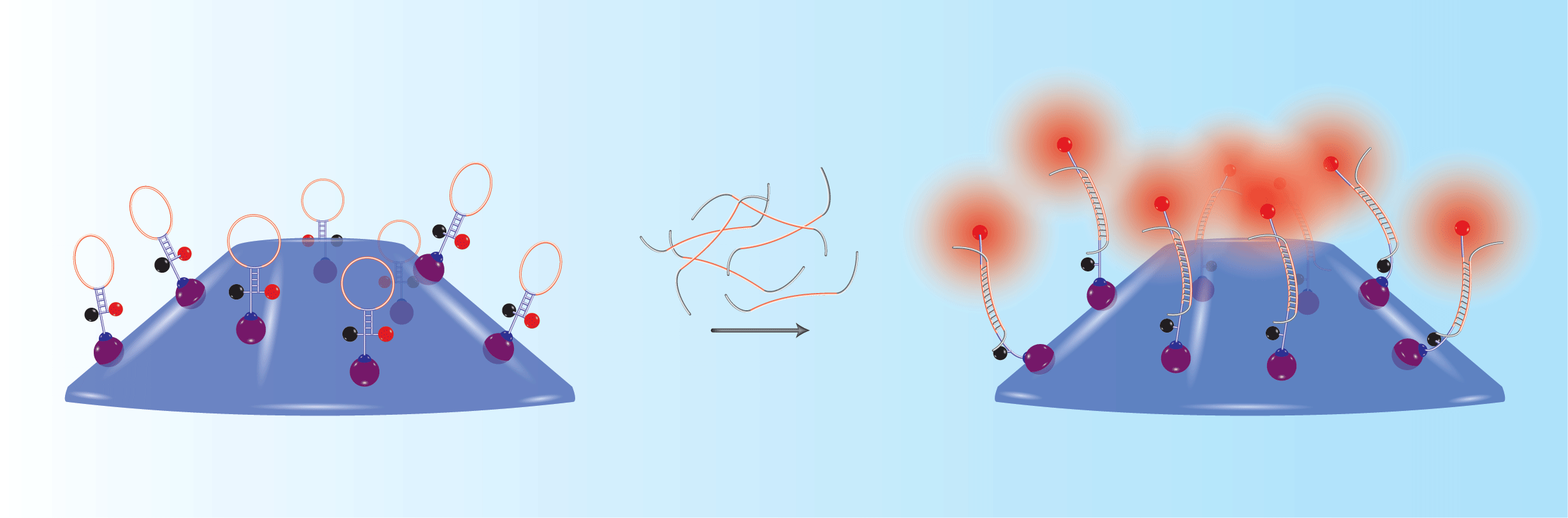
Microarray platforms are widely used because they are able to detect and identify many different nucleic acid sequences simultaneously. Many platforms use fluorescence-based detection techniques that require multiple steps to incorporate fluorophores into target sequences before analyzing them with the microarray. An attractive alternative is to use a platform that contains probes that become fluorescent upon binding to their target. Since molecular beacon probes remain dark when not hybridized to their target, they are especially suitable for use as signaling molecules on selfreporting DNA microarray platforms. In solution-based hybridization assays, molecular beacons have shown high sensitivity and high specificity for target nucleic acid sequences, and they are able to generate fluorescence signals as high as 200-fold greater than their fluorescence background. However, in previous studies, where molecular beacon probes where immobilized on solid surfaces, increases in the fluorescence signals were much lower, often in the single digits, due to high fluorescence backgrounds. The reduced performances are mainly attributed to molecular beacon-surface interactions, which compromise the function of molecular beacon probes.
 We developed a novel platform in which molecular beacons are immobilized within highly hydrated microhydrogels, creating a local environment that mimics solution-based hybridization events, and does not compromise the inherently performance of molecular beacon probes.
This work appeared in the March 23, 2012, issue of Soft Matter (Volume 8, Number 11, pages 3067-3076) and the cover of the journal featured our publication.
Recent Publications from our group
Pawar S, Xue HH, Wang S, Marras SAE, and Xue C (2026) A SuperSelective primer-based real-time PCR platform for hypersensitive detection of azole resistance in Cryptococcus neoformans. Microbiology Spectrum: e0116626. PMID: 42808770: PubMed Link
Vargas DY and Kramer FR (2026) SuperSelective PCR primers for determining cis/trans configurations of mutations within the same gene. PLoS One 21: e0349389. PMID: 42149869: PubMed Link